Dress Scared: The Unexpected Way Bold Fashion Choices Build Real Confidence
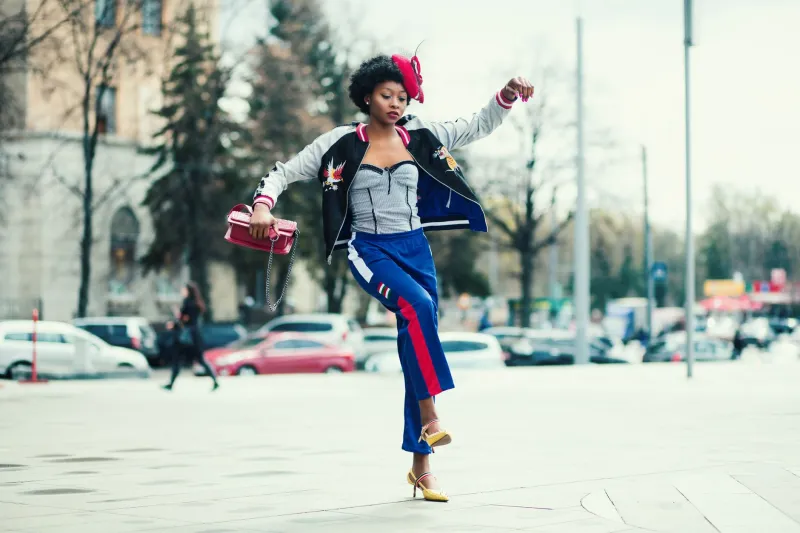
There's a pair of wide-leg trousers sitting in a closet in Atlanta. Bold print, high waist, the kind of silhouette that demands a room's attention the second you walk in. The woman who bought them has owned them for four months. She's worn them exactly zero times.
"Every morning I look at them and think, not today," she says. "And then I put on the same jeans I always wear and feel vaguely disappointed in myself."
She's not alone. Most of us have at least one piece like that — something we loved enough to buy but haven't been brave enough to actually wear. And here's the thing: that gap between wanting and doing? It's not really about the clothes.
Fashion Risk Is a Real Thing — And It's Psychological
Fashion psychologists (yes, that's a real field, and it's fascinating) have spent years studying the relationship between clothing choices and emotional states. What they've found is that dressing boldly isn't just an aesthetic decision — it's a behavioral one. When you wear something outside your comfort zone, you're essentially running a low-stakes experiment in courage.
The stakes feel high — because social judgment feels high — but the actual consequences of wearing a statement piece to brunch are pretty minimal. Nobody's getting fired. Nobody's losing a relationship. At worst, someone raises an eyebrow. At best, you spend the day feeling electric.
That's exactly why fashion is such a powerful training ground. It lets you practice the feeling of being seen without the weight of real risk. You get to rehearse boldness on a Tuesday afternoon at Target, which makes it easier to show up boldly in a boardroom or on a first date.
The Moment Everything Shifted
Marcus, a 29-year-old graphic designer from Chicago, remembers the first time he wore a dashiki-inspired print shirt to a client meeting. He'd bought it on a whim, loved it at home, and then spent two weeks convincing himself it was "too much" for a professional setting.
"I wore it on a day I was already feeling behind," he says. "I figured if the meeting went badly anyway, at least I'd look good."
It didn't go badly. The client commented on the shirt immediately — not to critique it, but because it started a real conversation about Marcus's design influences and creative background. He landed the project. More importantly, he walked out of that meeting feeling like himself in a way he hadn't in a long time.
"It sounds dramatic," he admits, "but wearing that shirt changed something. I stopped trying to dress like I thought people expected me to look."
That shift — from dressing for external approval to dressing from internal identity — is exactly what fashion risk-taking can unlock.
Why We Talk Ourselves Out of It
The voice that says not today is doing what all fear-based voices do: it's trying to protect you from discomfort. It disguises itself as practicality. That's too flashy. People will stare. It's not really your style. But what it's actually saying is: I don't want to be noticed. I don't want to be judged. I don't want to take up space.
And those aren't practical concerns. Those are old stories about who we're allowed to be.
Self-limiting beliefs about style usually trace back to something specific — a comment from a parent, a middle school moment, years of being told to "tone it down" or "dress appropriately." Fashion becomes the place where those old messages live. Which means fashion is also the place where you can start to rewrite them.
Start small if you need to. A bolder color than usual. An unexpected accessory. A silhouette you've admired on other people but never tried yourself. The point isn't to go from beige to neon overnight. The point is to choose something that makes you feel slightly exposed — and wear it anyway.
The Asante Principle: Culture as Courage
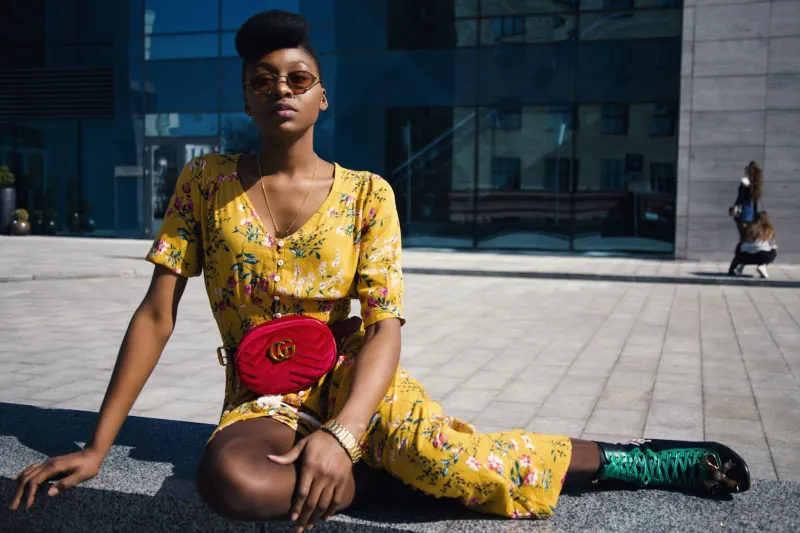
There's something worth naming here about cultural expression and fashion bravery. For a lot of Americans — particularly those whose cultural heritage sits outside the mainstream — wearing traditional or culturally-rooted clothing in everyday spaces already requires a kind of courage. The Afrocentric print. The kente detail. The wrap silhouette that reads as distinctly, deliberately not from a mall.
Wearing the culture isn't just a fashion choice. It's a declaration. And every time someone makes that declaration, they're doing the thing that fashion risk-taking is supposed to teach you: showing up fully, without apology, and trusting that your authentic self is worth seeing.
That's the Asante spirit. It's not about being loud for the sake of it. It's about refusing to make yourself smaller just because smaller feels safer.
How to Actually Do It
If you want to start practicing fashion courage, here's a real approach — not a listicle, just honest advice:
Wear it at home first. Sounds basic, but it works. Put on the intimidating piece and go about your morning. Cook breakfast. Answer emails. Let your nervous system get used to seeing yourself in it before you take it public.
Give it one outing with low stakes. Not a job interview. Not a first date. A coffee run. A grocery store trip. A walk around the block. Just enough exposure to break the seal.
Notice what actually happens. Most of the time, the world does not react the way fear tells you it will. People are busy. They're thinking about their own lives. The catastrophic judgment you imagined? It rarely shows up.
Pay attention to how you feel, not how you look. The mirror will tell you one story. Your body will tell you another. When you're wearing something that's authentically you, there's a physical sensation — a kind of settledness — that has nothing to do with whether the outfit is technically "flattering."
The Clothes Are the Easy Part
Here's the truth underneath all of it: the outfit is just the vehicle. What you're really doing when you wear something that scares you is practicing the belief that you deserve to be seen as you actually are — not as the toned-down, easy-to-digest version you've been presenting to the world.
That's not a small thing. That's the whole thing.
The wide-leg trousers in Atlanta? She wore them last Saturday. Farmers market. Bright morning. She said three strangers complimented her before she even got to the tomatoes.
"I felt ridiculous for about four minutes," she laughed. "And then I just felt like myself."
That's the formula. Wear the thing. Feel the feeling. Come out the other side knowing you're bigger than your own hesitation.
Your wardrobe has been waiting for you to catch up.