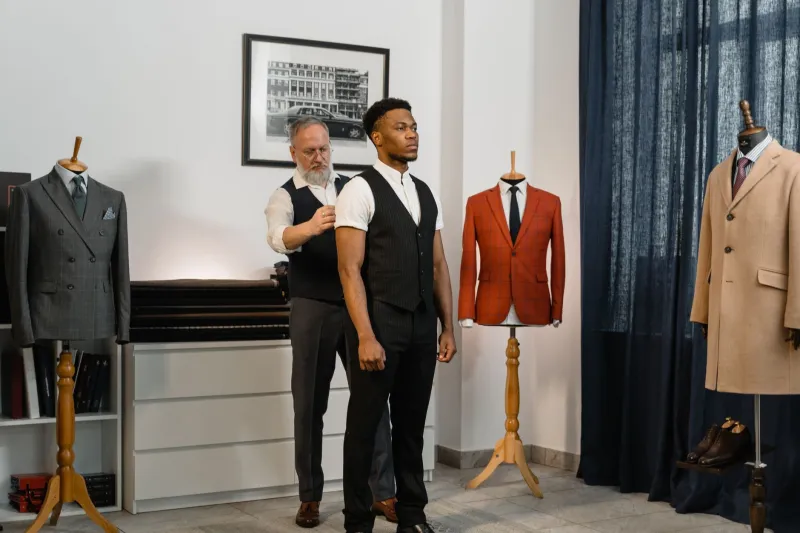
The $40 Fix: How a Tailor Turns Cheap Clothes Into Custom Ones
Off-the-rack fit is a myth sold to us by sizing charts. Here's the math, the strategy, and the five alterations that deliver the biggest transformation for the least money.

Wear the Culture. Own the Moment.
Off-the-rack fit is a myth sold to us by sizing charts. Here's the math, the strategy, and the five alterations that deliver the biggest transformation for the least money.

Remote work didn't just change where Americans get dressed — it changed what we own. A look at the rise of the two-zone closet, and how to rebuild a full wardrobe when only half of it gets seen.
Somewhere along the way, America decided that wearing an outfit twice was a fashion crime. We traced how that idea took hold, talked to people who happily break the rule, and made the case that a signature look beats a feed full of one-hit wonders.
Every season, the fashion machine cranks out a new wave of must-haves — and every season, a lot of those pieces end up shoved to the back of a closet six months later. Learning to read the trend cycle critically isn't about avoiding fashion. It's about buying smarter, spending less, and keeping only what actually earns its place in your wardrobe.
The capsule wardrobe promised freedom and delivered frustration. If you've ever stared at a perfectly curated closet and still felt like you had nothing to wear, you're not alone — and you're not the problem. Here's why minimalist fashion theory keeps missing the mark for real people with real lives.
American fashion has always been shaped by global influences — and that's part of what makes it so dynamic. But there's a meaningful difference between drawing inspiration from other cultures and treating those cultures as a costume. Understanding that line isn't about walking on eggshells. It's about dressing with the kind of awareness that makes your style genuinely your own.
There's a category of clothes in most people's closets that never gets worn — not because it doesn't fit, but because something deeper keeps getting in the way. Fear, self-doubt, and the quiet belief that you haven't earned the right to look that good yet. It's time to talk about that.
Most of us think we know our style — but our closets tell a completely different story. A real wardrobe audit isn't about purging; it's about finally paying attention to the data you've been generating every single morning. Here's how to read it.
Seasonal closet rotation isn't just about swapping sweaters for shorts. Done right, it's a psychological reset that makes your existing wardrobe feel brand new — and quietly kills the urge to buy things you don't actually need. Here's the method that actually works.
If you've ever pulled a 'new' piece out of a shopping bag only to realize it looks suspiciously like something already hanging in your closet, you're not alone. Outfit amnesia is real, it's common, and it's quietly draining your wallet and your style potential. Here's how to break the cycle for good.
A single Swahili word is quietly changing the way a new generation of Americans think about what they wear and why they buy it. The concept of 'asante' — rooted in gratitude, intention, and abundance — is challenging the throwaway culture that fast fashion built. Here's how embracing that philosophy is reshaping the relationship between consumer, clothing, and identity.
There's a reason some people walk into a room and instantly shift the energy — and it has everything to do with how they dress. The psychology behind intentional fashion is real, measurable, and something you can absolutely harness. Here's what the research says, and here's how to make it work for you.
What if the way you think about buying clothes could quietly transform your finances? Rooted in the Swahili spirit of asante — gratitude and abundance — this approach to fashion spending rewires how you value what you wear, turning every purchase into an intentional act of self-investment.
Buried in the back of your closet is basically a diary you never meant to write. Every phase, every pivot, every version of yourself is hanging right there on a hanger. Pull one out and you might be surprised by what it tells you.
Something is quietly shifting in the way Americans shop for clothes — and it goes way deeper than aesthetics. A growing wave of shoppers, led by Gen Z and millennials, are ditching impulse buys in favor of pieces that carry actual meaning. Here's what that shift looks like in practice, and why brands rooted in cultural intention are leading the charge.
That outfit hanging in your closet with the tags still on — the one you keep talking yourself out of — might be the most important thing you own. Wearing something that makes your heart race a little isn't vanity. It's practice for being fully, unapologetically yourself.
That $12 top might feel like a win at checkout, but the real price tag shows up later — in your confidence, your mental energy, and your sense of self. Here's why cheap fashion is one of the most expensive habits you can have, and what it really means to invest in how you show up.
Most of us are walking past dozens of unworn pieces every single morning without even realizing it. A real wardrobe audit isn't about throwing everything out — it's about finally understanding why certain clothes earn their space and others are just collecting rent. Here's how to take a hard, honest look at what you own and come out the other side dressing better.
The Swahili word 'asante' means thank you — and it turns out that simple act of appreciation might be the most powerful style tool you're not using. When you slow down and bring real gratitude into how you shop, wear, and relate to your clothes, everything shifts. Less clutter, more confidence, and a wardrobe that actually means something.
Every outfit you put on is quietly telling a story about who you are — whether you realize it or not. The most memorable people in American culture didn't stumble into their signature looks; they built them with purpose. Here's how to start doing the same.