The Permission Problem: Why You Keep Saving Your Best Outfits for a Day That Never Comes
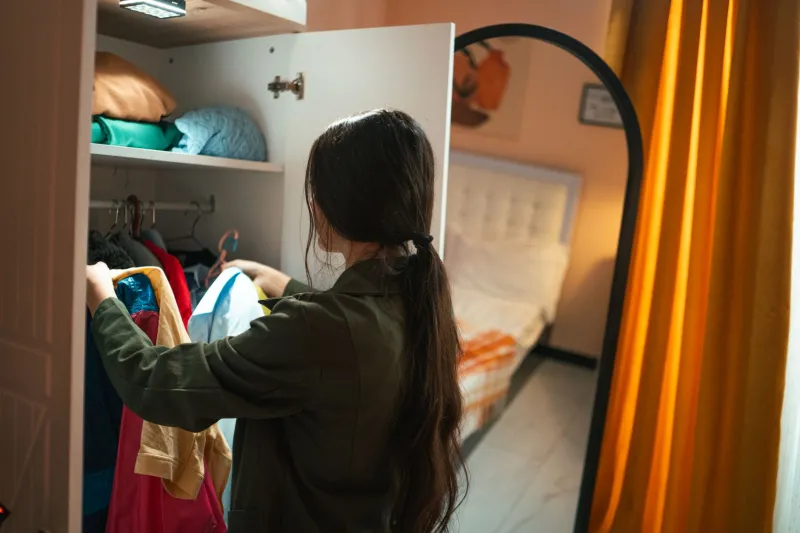
Somewhere in your closet, there's a piece you love but never wear. Maybe it's a bold printed jacket that felt like you in the store but hasn't made it out of the house. Maybe it's a dress that fits perfectly but stays on the hanger because you can't quite figure out "the right occasion." Maybe it's something you bought because it made you feel powerful for exactly thirty seconds in a dressing room, and then quietly terrified you for the six months since.
You know the piece. Most people have at least one. Some have a whole section.
This isn't really a closet problem. It's a permission problem. And it costs more than most people realize — financially, emotionally, and in ways that are harder to quantify but just as real.
What "Permission Clothes" Actually Are
Let's name the thing directly. Permission clothes are pieces you feel like you need to earn the right to wear. They come with invisible conditions attached: when I lose the weight, when I get the promotion, when I'm more confident, when I'm somewhere important enough, when people won't stare.
The conditions feel reasonable from the inside. But here's the thing about conditions like those — they almost never get met, because the bar moves. You lose the weight and suddenly the piece feels like it draws too much attention. You get the promotion and somehow you still don't feel like you've "arrived" enough. The occasion never quite materializes, or it does and you talk yourself out of it at the last minute.
Permission clothes are aspirational in the worst way — not aspirational toward a goal you're working toward, but aspirational toward a version of yourself you've decided you're not yet allowed to be.
The Real Cost of Playing It Safe
Here's where the financial reality enters the conversation, because it's worth being blunt about it.
Every piece sitting unworn in your closet represents money you already spent. The transaction is done. The cost is already absorbed. Keeping the item doesn't recover that cost — it just means you're now paying twice: once with the original purchase, and once with the daily low-grade anxiety of looking at something you love and telling yourself you can't wear it yet.
And the longer something sits unworn, the harder it gets to wear it. The buildup of expectations around a piece — the weight of all the times you've passed it over — makes it feel more significant, not less. What started as a cool jacket becomes a psychological object. That's a lot of pressure to put on a piece of clothing.
For style-conscious shoppers who care about building a wardrobe that actually works, this is one of the most expensive habits to carry. Not expensive in the sense of what you're spending, but in the sense of what you're not getting back.
Identifying the Fear Underneath
Not all permission clothes come from the same place, and it's worth knowing which category yours falls into.
Body insecurity is probably the most common. The piece that would look incredible but requires you to feel okay about a part of your body you've been in a quiet war with. The fitted silhouette, the shorter hemline, the sleeveless top. These get shelved not because they don't work, but because wearing them means being visible — and visibility feels risky when you're not fully at peace with what's being seen.
Fear of judgment is a close second. The bold print, the unexpected color, the silhouette that doesn't look like everyone else's. These pieces get held back because wearing them means standing out, and standing out means people might have opinions. This one is particularly insidious because it masquerades as practicality — "it's just not really my scene" or "I don't have anywhere to wear that" — when what's actually happening is a preemptive retreat from potential criticism.
Imposter syndrome dressing is subtler but just as real. This is the person who buys clothes that reflect where they want to be — professionally, socially, creatively — and then can't bring themselves to wear them because they don't feel like they've "arrived" yet. The elevated, put-together pieces that feel like a costume for someone else's life.
Reclaiming the Pieces You've Been Holding Back
The framework here is simpler than you might expect, but it requires genuine honesty with yourself.
Start with one piece. Not the most terrifying item in your closet — pick something that's maybe a 6 out of 10 on the anxiety scale. Something you love but have been avoiding. Commit to wearing it somewhere real — not just around the house, but out into the world. A coffee run, a lunch, a quick errand. Somewhere low-stakes but actual.
What you're doing is separating the piece from the buildup of meaning you've attached to it. It's just a piece of clothing. It goes on your body. You go outside. The world doesn't stop.
Notice what actually happens. Most of the time, the answer is: nothing catastrophic. Maybe someone compliments you. Maybe no one says anything at all. Either way, you wore the thing, and you survived, and you probably felt pretty good. That experience is data — real data that your brain can use to recalibrate the threat level on the next bold piece.
Stop saving things for special occasions that you define too narrowly. Tuesday is a special occasion. A regular Wednesday at work is a special occasion. The argument that a piece is "too much" for everyday life is often just another version of the permission problem — a way of indefinitely delaying the moment when you actually show up as yourself.
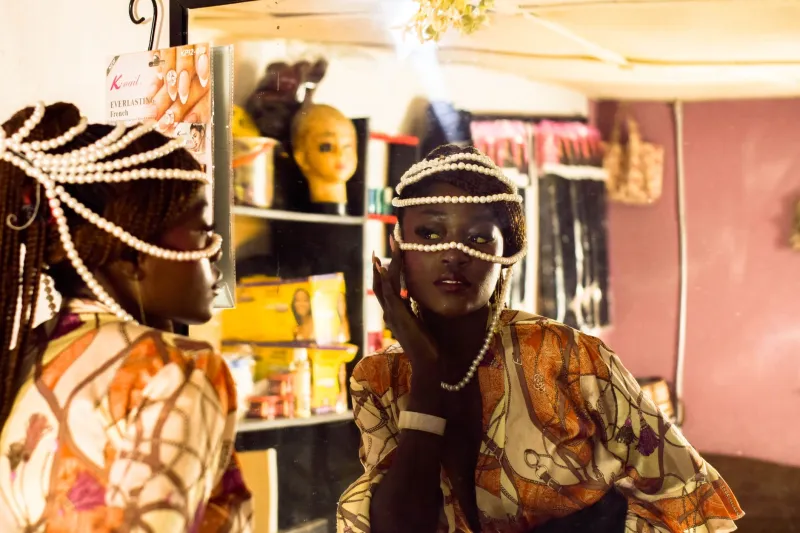
At Asante Clothing, the whole ethos is about wearing with intention — pieces that carry meaning, that connect you to culture and identity and the moment you're actually in. But that only works if you let yourself wear them. Culture isn't meant to live in your closet. It's meant to be worn.
The Flip Side: What Happens When You Stop Waiting
There's a version of your wardrobe — and your presence in the world — that exists on the other side of the permission problem. It's not dramatic. It's not overnight. But it's real.
When you stop holding your best pieces hostage to conditions that never arrive, a few things shift. You start dressing for the life you're actually living, not the one you're waiting to be worthy of. The clothes you love get worn, which means they justify their cost, which means you feel better about what you bought. And the confidence that comes from consistently showing up in things you actually love — that's not small. That compounds.
The special occasion isn't coming to find you. You are the occasion. Dress accordingly.