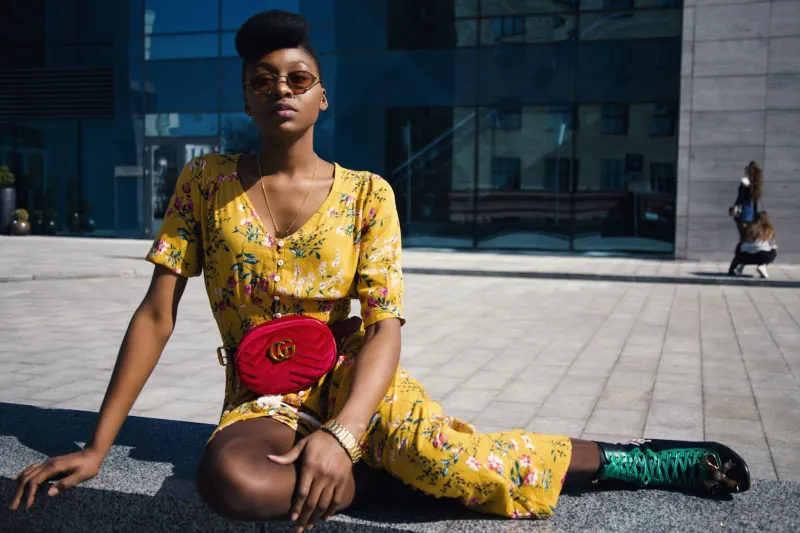
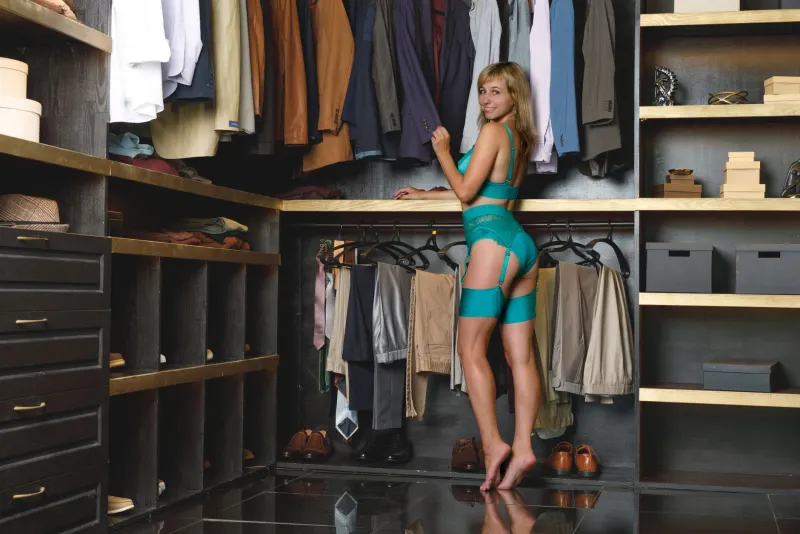
Your Closet Is a Time Machine: What Your Old Outfits Reveal About Who You've Become
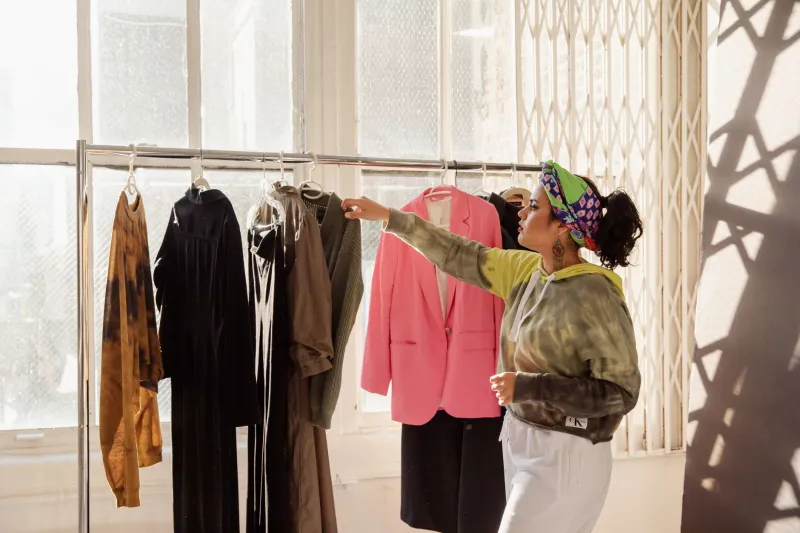
The Jacket You Can't Throw Away
You know the one. It doesn't quite fit anymore — maybe literally, maybe just spiritually — but something keeps you from donating it. It's not sentimental in the greeting-card way. It's something more complicated than that. It's a relic. A receipt. Proof that you once showed up to life in a very specific way, for very specific reasons, and that version of you mattered.
We talk about fashion like it's always forward-facing — what's trending, what's next, what to cop this season. But here's the thing nobody really slows down to say: your wardrobe isn't just a collection of clothes. It's a running record of every chapter you've lived through. And if you actually sit with it — really look at it — you'll find out more about yourself than any personality quiz ever handed you.
This is the outfit memoir. And yours is already written.
Phase Dressing: How Every Era Gets Its Own Uniform
Think back to high school. Not the highlight reel version — the real one. What were you wearing? For a lot of people, those clothes were less about personal taste and more about belonging. The brand on your hoodie was a signal. The fit of your jeans was a vote. You were dressing for a tribe, or dressing to disappear into one, or dressing to quietly rebel against the one you were supposed to be in.
That's not shallow. That's deeply human.
Psychologists who study identity development have long pointed out that clothing functions as an external expression of internal negotiation — especially during periods of transition. When you're figuring out who you are, you try on identities the same way you try on fits: some feel right, some feel ridiculous in the mirror, and some you wear confidently for years before realizing they were never really you.
College hits and the wardrobe shifts again. Maybe you went minimalist because you were broke and made it a philosophy. Maybe you leaned into thrifting and turned budget into aesthetic. Maybe you discovered a cultural touchstone — a music scene, a creative community, a heritage you started reclaiming — and your clothes started reflecting that. The evolution isn't accidental. It's autobiographical.
What You Kept and Why It Matters
Here's where it gets interesting: the pieces you held onto through every closet purge are the ones worth examining. Not the stuff you kept because it was expensive or because you swore you'd wear it again. The stuff you kept because letting go of it felt like erasing something.
Maybe it's a dress you wore to your first real job interview. Maybe it's a pair of sneakers from a relationship that changed you. Maybe it's a vintage shirt that belonged to someone who isn't around anymore. These aren't just clothes. They're anchors to moments when you were becoming.
Fashion psychologist Dawnn Karen, who literally wrote the book on mood and dress, has talked extensively about how clothing carries emotional memory — that what we wear becomes fused with what we felt, what we wanted, and who we were trying to be. When you hold onto a piece long after its style moment has passed, you're not being sentimental in a weak way. You're honoring a chapter of your own story.
That's actually kind of powerful.
The Cringe Factor Is the Data
Okay, let's be honest. Some of what you find back there is going to make you laugh — or wince. The ultra-low-rise jeans. The graphic tees with phrases you'd never say out loud now. The going-out top that was doing a lot of heavy lifting circa 2012.
But here's the reframe: the cringe is actually useful information.
When a past outfit makes you cringe, it usually means one of two things. Either the culture around it has shifted and you've shifted with it — which means you're paying attention, you're growing, you're not frozen. Or it means you were wearing something that wasn't really you to begin with, and you've since found your way closer to who you actually are.
Neither of those is something to be embarrassed about. Both of them are evidence of movement.
The people who never cringe at their old style? They're either incredibly consistent or they stopped evolving. And in fashion — like in life — evolution is kind of the whole point.
Reclaiming vs. Leaving Behind
One of the more fascinating things about revisiting your outfit history is figuring out which pieces deserve a second act and which ones are genuinely done. Not everything old is worth reviving, but not everything old should be discarded either.
Right now, there's a massive cultural conversation happening around wearing your roots — leaning into the visual languages of your heritage, your community, your lineage. For a lot of people in the US, especially those with deep ties to African, Caribbean, Latin, or Asian cultures, that means going back through their own history and the history of their families and finding the threads — literal and figurative — worth carrying forward.
That's not nostalgia. That's curation. That's deciding which parts of your past deserve to travel with you.
At Asante Clothing, we think about this a lot. The name itself — Asante, meaning "thank you" in Swahili — is a nod to gratitude, to acknowledgment, to honoring what came before while stepping fully into now. Your wardrobe can do the same thing. It can be a living document that respects your history while making room for who you're still becoming.
Writing the Next Chapter
So here's the exercise, if you're up for it: spend twenty minutes actually going through your closet — not to purge, not to organize, just to look. Pull out the pieces that feel significant, even if you can't immediately explain why. Lay them out. Think about when you wore them, what was going on in your life, who you were trying to be or trying to impress or trying to become.
You'll probably notice a pattern. Maybe your style gets bolder in periods when you were thriving and retreats into basics when things got hard. Maybe certain colors show up during certain emotional seasons. Maybe you dressed most like yourself during a specific chapter and slowly drifted away from it — and that drift is worth paying attention to.
The outfit memoir isn't really about clothes. It's about continuity. It's about understanding that you are not a random collection of choices but a person with a throughline — a style of being in the world that has always been uniquely yours, even when it was still finding its shape.
The next chapter? That's the one you're dressing for right now.
Make it count.