Why the Clothes You Keep Are Starting to Actually Mean Something
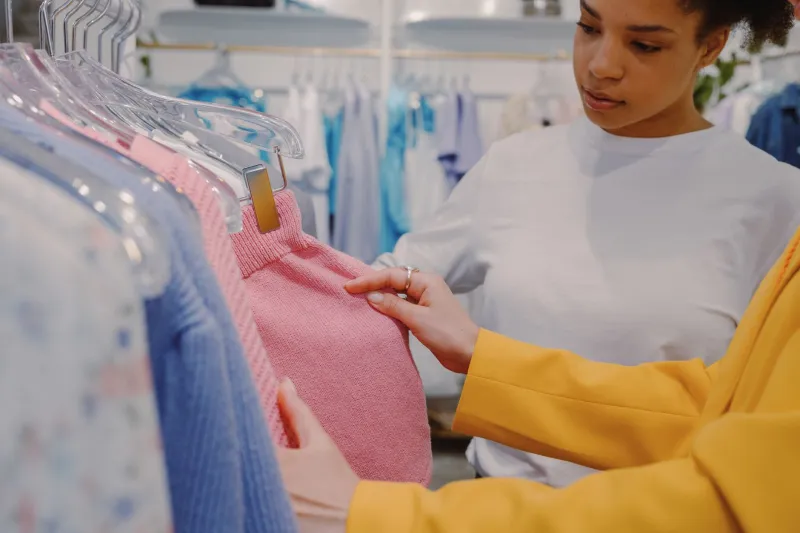
Open most American closets and you'll find the same story: a graveyard of impulse purchases, tags still attached, things bought on sale that never quite fit right, fast fashion hauls that felt exciting for about a week. The average American buys roughly 68 garments a year. Most of them disappear — donated, trashed, or shoved into corners — within 12 months.
But something is changing. Slowly, then all at once.
A different kind of shopper is emerging — one who asks different questions before buying. Not just does this look good? but why does this exist? Who made it? What does it say about where I come from and where I'm going? These aren't abstract questions anymore. They're reshaping what ends up on hangers, what gets worn on repeat, and what actually stays.
The Intentional Shopper Is Not a Trend — It's a Shift
The word "intentional" gets thrown around a lot in wellness circles, but it's landed hard in fashion too — and for good reason. Intentional shopping doesn't mean boring shopping. It doesn't mean buying less for the sake of minimalism or following some rigid capsule wardrobe rulebook. It means buying with awareness. Knowing what you actually need. Knowing what resonates with you on a level that goes beyond the algorithm that served you an ad.
Gen Z, in particular, has grown up watching the consequences of overconsumption play out in real time — environmentally, economically, culturally. They've seen fast fashion brands face scrutiny for labor practices. They've watched trends cycle so fast that keeping up feels less like self-expression and more like a part-time job. So many of them have simply stopped trying to keep up.
Millennials, meanwhile, are at a stage of life where closet fatigue is real. After years of buying things that felt right in the moment and wrong six months later, a lot of them are ready to slow down and actually invest.
Together, these two groups are driving a quiet but powerful shift: away from volume, toward value. Away from quantity, toward things that actually stick.
What "Keeping It" Actually Looks Like
Here's a useful way to think about it: the pieces that survive long-term in any closet are the ones that earn their place. They get worn. They get layered. They get packed for trips and pulled out for important days. They hold up after washing. They still feel right two years later.
Most fast fashion doesn't survive that test. The fabric pills. The cut was never quite right. The trend it was built around faded. Out it goes.
But clothing that's built around something more durable — cultural identity, craftsmanship, a genuine design philosophy — tends to stick around. Because it wasn't bought to chase a moment. It was bought to represent one.
That's the practical reality behind the intentional shopping movement. People aren't just making philosophical choices — they're making smarter ones. When you buy a piece that genuinely connects with who you are, you wear it more. When you wear something more, you justify the cost more easily. The math starts to work in your favor.
The Cultural Piece That Changes Everything
One of the most interesting parts of this shift is the role that cultural identity is playing in it. For a long time, mainstream American fashion had a pretty narrow definition of what was stylish, aspirational, or worth investing in. That definition is cracking open.
More shoppers — particularly shoppers of color, first-generation Americans, and people who've felt unseen by legacy fashion brands — are actively seeking out labels that reflect their actual heritage and lived experience. They're not just looking for clothes. They're looking for recognition. For representation built into the fabric, literally and figuratively.
Brands like Asante Clothing are part of this wave. The name itself carries weight — asante means "thank you" in Swahili, a language spoken across East Africa by tens of millions of people. That's not a coincidence or a marketing gimmick. It's a values statement embedded in the brand's identity from the ground up. When a brand's foundation is gratitude, cultural pride, and self-expression, it tends to attract shoppers who are shopping for the same reasons.
And those shoppers? They keep what they buy.
The Ripple Effect on the Whole Closet
Here's where it gets really interesting. When people start buying intentionally — even just one or two pieces at first — it tends to change how they see everything else in their closet.
Suddenly, the things that don't hold up to the same standard become obvious. The pieces that were bought without thought, that don't fit right, that don't say anything — they start to feel out of place next to the things that do. And gradually, almost naturally, people start editing. Not because a style influencer told them to, but because the contrast becomes impossible to ignore.
This is what you could call the ripple effect of intentional shopping. One good purchase creates a new standard. That standard slowly reshapes the whole wardrobe. Over time, the closet that emerges is smaller but far more functional — full of things that get worn, that hold up, that feel genuinely personal.
That's a fundamentally different relationship with clothing than the one most Americans have been conditioned to have.
Style That Stays Because It Means Something
None of this means everyone needs to become a fashion philosopher before buying a shirt. But it does suggest that the most satisfying wardrobes — the ones that actually work, the ones that feel like you — tend to be built from a place of intention rather than impulse.
The pieces that last aren't always the most expensive ones. They're the ones that were chosen for the right reasons. The ones that fit the life you're actually living, not just the one you imagined when you were standing in a dressing room. The ones that carry a story — cultural, personal, or both.
As more Americans start to think this way, the brands that are built on something real are the ones that will matter. Not because they're louder or cheaper or more trend-forward, but because they give people something worth keeping.
And in a world full of closets stuffed with things nobody actually wears, that's not a small thing. That's everything.