Walk In and Own It: The Science Behind Why Intentional Dressers Command Every Room
You've felt it before. Someone steps into a meeting, a party, a coffee shop — and without saying a single word, the room subtly reorganizes itself around them. Heads turn. Postures shift. People lean in before the conversation even starts. It feels like magnetism, like some intangible social currency. But here's the thing: it's not magic. A huge part of what you're witnessing is the result of deliberate, intentional dressing — and the ripple effects it creates are backed by actual science.
At Asante Clothing, we've always believed that what you wear isn't just fabric and color. It's communication. It's positioning. It's a declaration made before you open your mouth. And when that declaration is made with intention? The world responds differently.
What Researchers Have Been Saying for Years
Social psychologists have long studied the relationship between appearance and perceived authority. A landmark concept called enclothed cognition — introduced by researchers Hajo Adam and Adam Galinsky — found that the symbolic meaning of clothing directly influences the wearer's psychological state and, consequently, how others perceive them. In their studies, people who wore a doctor's lab coat performed better on attention-based tasks than those who didn't. The coat wasn't just clothing — it was a signal, both internally and externally.
Translate that to your everyday wardrobe and the implications get interesting fast. When you put on an outfit that feels aligned with who you are and where you're going, your brain picks up on that coherence. You carry yourself differently. You speak with more ease. You take up space — not aggressively, but naturally — in a way that registers as confidence to everyone around you.
And confidence, as it turns out, is one of the most contagious social signals humans emit.
The Workplace Effect Is Very Real
Let's bring this out of the lab and into real life. Think about the last time you had a high-stakes day — a pitch meeting, a job interview, a first day at a new role. Chances are, you thought harder about what you wore that morning than on a typical Tuesday. That instinct isn't vanity. It's emotional intelligence.
Research from Northwestern University and other institutions has consistently shown that people in professional environments make rapid judgments — within seconds — about a person's competence, trustworthiness, and leadership potential based on appearance. Those first impressions are notoriously sticky. They color how colleagues interpret your ideas, how managers evaluate your contributions, even how clients decide whether to trust you with their business.
This doesn't mean you need to wear a suit to be taken seriously. It means you need to wear something that reflects intentionality. Thoughtful choices — a well-fitted silhouette, a bold but cohesive color palette, pieces that feel personal and purposeful — signal that you're someone who pays attention to detail. And people who pay attention to detail tend to get trusted with bigger things.
Social Spaces Work the Same Way
The office isn't the only arena where this plays out. Social environments — house parties, networking events, first dates, family gatherings — are just as loaded with unspoken visual language. When you show up dressed with intention, you're doing something subtle but powerful: you're communicating self-respect. And self-respect is deeply attractive to other people.
There's a reason the phrase "dressed with purpose" hits differently than "dressed up." Dressing up implies performance, an external show. Dressing with purpose implies alignment — that what's on the outside reflects something real on the inside. People can feel that difference, even if they can't articulate it. It's why certain individuals seem effortlessly magnetic in casual streetwear while others feel overdressed in expensive pieces that don't suit them. The clothes aren't the whole story. The relationship between the person and the clothes is what registers.
Intentional Doesn't Mean Expensive
Here's where a lot of people get tripped up. They hear "intentional dressing" and picture a wardrobe full of high-end labels and designer price tags. That's not it at all. Intentionality is about curation, not cost. It's about choosing pieces that actually work for your body, your lifestyle, and your personal aesthetic — and then wearing them with conviction.
Someone in a $40 graphic tee that fits perfectly and reflects their cultural identity walks into a room differently than someone in a $400 shirt they're not sure about. The confidence gap is visible. The connection to the garment is visible. What you spend is irrelevant compared to how deliberately you chose it and how fully you've owned it.
At Asante Clothing, that philosophy is baked into everything we do. We design pieces that are meant to be worn with purpose — pieces that carry cultural weight, aesthetic boldness, and the kind of versatility that lets you build a wardrobe around your story, not someone else's trend cycle.
How to Start Dressing with More Intention
If this resonates and you're wondering where to actually begin, start small and start honest.
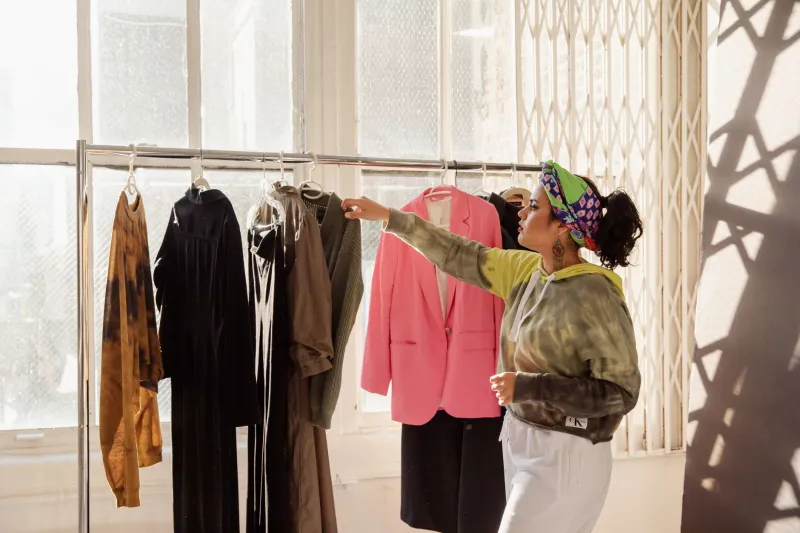
Audit your current relationship with your clothes. When you open your closet, what do you feel? Overwhelmed? Indifferent? Or genuinely excited? The pieces that make you feel something — lean into those. The ones that don't? They're just taking up space.
Get clear on the version of yourself you're dressing for. Not the aspirational fantasy version, but the real, evolving you who has places to be and things to accomplish this week. What does that person wear? What does their wardrobe say about their values, their confidence, their cultural identity?
Pay attention to fit above all else. Nothing undermines intentional dressing faster than clothes that don't fit well. A great silhouette communicates care and self-awareness. It tells the room you know yourself.
Choose pieces that mean something. Whether that's a print rooted in your cultural heritage, a color that makes you feel powerful, or a style that reflects a community you belong to — meaning creates magnetism. Wear things that have a story, even if that story is only yours to know.
The Ripple Starts with You
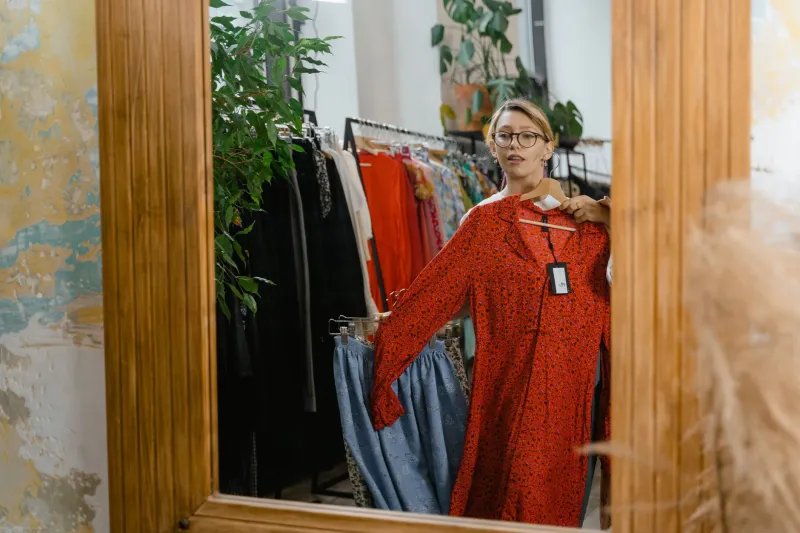
Here's the truth that ties all of this together: the respect you command in a room doesn't start with the room. It starts with the decision you make when you're standing in front of your mirror, deciding who you're going to show up as today.
When you dress with intention, you're not performing for anyone. You're not trying to impress or intimidate or fit in. You're doing something quieter and more powerful than any of that — you're showing up as yourself, fully and deliberately. And that kind of presence? It doesn't just fill a room. It shifts it.
That's the effect we're talking about. That's what intentional fashion actually does. And it's available to anyone willing to get honest with themselves and start making choices that actually mean something.
Wear the culture. Own the moment. The room will notice.