The $40 Fix: How a Tailor Turns Cheap Clothes Into Custom Ones
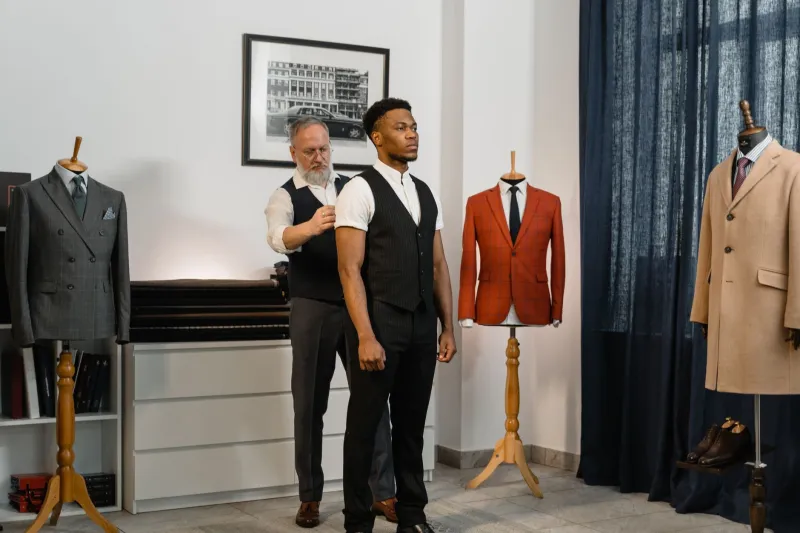
Let's kill a myth right now: there is no such thing as clothes that 'fit' off the rack. Sizing charts are built for an imaginary average person who doesn't shop, doesn't sit, and doesn't have shoulders. Every rack in America is an approximation. A tailor is how you close the gap.
And here's the part most shoppers miss — closing that gap usually costs less than a nice dinner out.
The Math Nobody Shows You
Take a $60 pair of trousers that almost fit. Add a $35 alteration — waist taken in, hem adjusted to your actual inseam — and you now own a $95 pair of pants that fit like they were made for you. Compare that to a $450 designer pair that still needs a hem, and the logic collapses fast.
We ran the comparison for a basic five-piece work wardrobe:
| Approach | Upfront Cost | Alterations | Total | Fit Quality |
|---|---|---|---|---|
| Mid-price pieces, tailored | $310 | $140 | $450 | Excellent |
| Designer pieces, off the rack | $1,200 | $0–100 | ~$1,275 | Inconsistent |
Same money in one scenario. Wildly different results. Tailoring isn't a luxury add-on — it's the cheapest upgrade in fashion.
The Five Alterations With the Biggest Payoff
Not all alterations are equal. Some transform a garment; some barely justify the pin. In order of visual impact:
1. Hemming pants (with the right break). The single most common reason cheap clothes look cheap. A proper hem — no break for a modern look, a slight break for classic trousers — instantly reads as intentional. Cost: $15–25.
2. Taking in a shirt or dress at the side seams. That billowy torso is the tell of off-the-rack clothing. Bringing in the sides by an inch or two creates shape without restructuring anything. Cost: $20–40.
3. Shortening sleeves. Sleeves that swallow your hands undermine everything else you're wearing. Your jacket cuff should hit right at the wrist bone, showing a half inch of shirt cuff if you're layering. Cost: $25–40 for jackets, less for shirts.
4. Nipping the waistband. Gap in the back of your jeans? A tailor can add darts or take in the band for a fraction of the cost of hunting for a 'perfect' pair that doesn't exist. Cost: $15–30.
5. Shortening straps on dresses and tops. Strap length controls where a neckline sits, and neckline position controls whether a piece looks elegant or accidental. Cost: $10–20.
What to Buy With Tailoring in Mind
Tailoring rewards smart shopping. Look for pieces that fit your largest measurement — shoulders and chest for tops, hips for bottoms — since those are expensive or impossible to alter. Everything else can be brought in. A too-big garment can usually be fixed; a too-small one usually can't.
Natural fibers also tailor better. Cotton, wool, and linen take in and let out more gracefully than synthetics that pucker under the needle.
Build the Habit
Find a local tailor the way you'd find a barber — ask around, start with one simple job like a hem, and see how you like the work. Once you've worn a garment that actually fits, something shifts. You stop seeing your body as the problem and start seeing bad fit as the problem. That's not vanity. That's just accurate information.
The best-dressed people you know aren't buying better clothes than you. They're finishing the clothes they buy.