Secondhand First: How the Smartest Dressers Are Building Luxury Wardrobes Without the Luxury Price Tag
There's a quiet flex happening across America right now, and it doesn't involve a shopping bag with rope handles or a receipt that makes your stomach drop. It looks like a perfectly worn leather blazer sourced from a Depop seller in Portland. It looks like a barely-used pair of designer denim found on Poshmark for $38. It looks like a wardrobe that feels expensive because it is — just not in the way anyone expected.
Welcome to the thrift-to-luxury pipeline: the art of building a high-end, intentional wardrobe through strategic secondhand shopping. And if you haven't caught on yet, a whole generation already has.
Why Resale Became the New Retail
Something shifted in American shopping culture around the early 2020s. Inflation made fast fashion feel less like a bargain and more like a trap — you'd spend $25 on a top that fell apart in three washes and end up buying it twice. Meanwhile, the resale market exploded. Platforms like ThredUp, The RealReal, Vestiaire Collective, Depop, and Poshmark made it genuinely easy to find quality pieces at a fraction of the original price.
According to ThredUp's annual resale report, the secondhand market is expected to reach $350 billion globally by 2028. That's not a niche hobby anymore — that's a full-on cultural shift. Gen Z and millennials are leading the charge, but the appeal has spread well beyond age brackets. When you can find a Helmut Lang jacket for $60 or a vintage Ralph Lauren polo for $15, the logic is hard to argue with.
The deeper appeal, though, isn't just financial. It's about curation. Thrifting forces you to slow down, to look carefully, to ask whether something is actually you before you buy it. That process builds a different kind of relationship with your clothes.
The Psychology of Owning Less, Better
Here's something most fast fashion brands won't tell you: owning fewer pieces that you genuinely love is more satisfying than owning a closet full of stuff you're indifferent to. Psychologists call this the endowment effect — we place higher value on things we've invested time and intention into acquiring.
When you spend an afternoon digging through a vintage shop in Brooklyn or refreshing a saved search on Mercari until the right piece appears, you've done something active. You've made a choice. That piece carries a story before you even put it on.
This is the psychology behind the capsule wardrobe movement, which has become deeply intertwined with the secondhand economy. The goal isn't minimalism for minimalism's sake — it's building a closet where every item earns its place. Where nothing is filler. Where you open the door in the morning and actually feel something.
How to Shop the Resale Market Like a Pro
If you're new to the thrift-to-luxury pipeline, the learning curve is real but short. A few principles go a long way.
Know your brands before you browse. Before you start scrolling, do a little homework. Identify five to ten brands known for quality construction and materials — think A.P.C., Cos, Eileen Fisher, Coach, Carhartt WIP, or any heritage label that holds up over time. These are the names worth hunting for on resale apps because they're built to last and they photograph well, which means sellers price them accordingly but still below retail.
Use saved searches obsessively. Every major resale platform lets you save searches and get notifications when new listings match your criteria. Set up searches for your size, preferred brands, and specific items you've been wanting. This is where patience pays off — the right piece will show up eventually, and you'll be ready when it does.
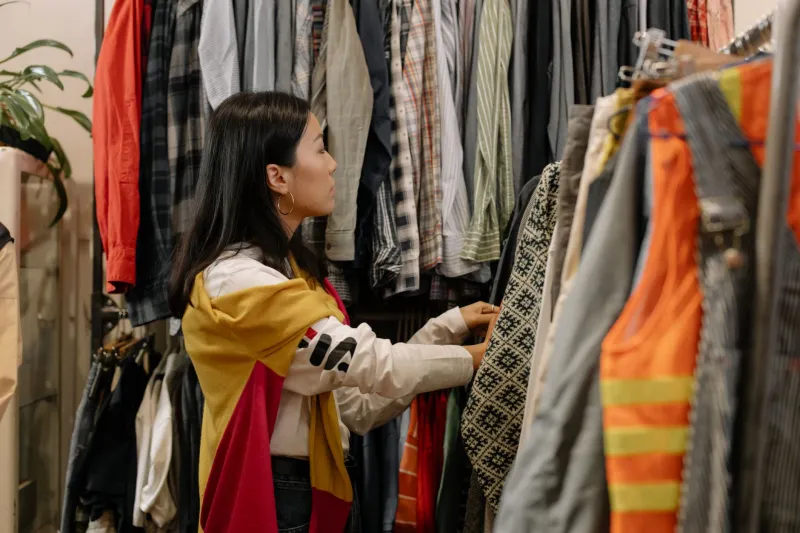
Thrift in person for the unexpected. Apps are great for targeted hunting, but physical thrift stores — Goodwill, Salvation Army, local consignment shops, and estate sales — are where the real surprises live. The algorithm can't predict what you'll find on a Tuesday afternoon in a Midwest Goodwill. Some of the most iconic wardrobe pieces come from exactly that kind of serendipity.
Inspect before you invest. Quality checking is a skill you'll develop fast. Look at seams, check zippers, examine fabric weight, and look for pilling or fading. A piece with minor wear can often be restored; structural damage usually can't. Learn the difference.
Flip to fund. One of the smartest moves in the secondhand ecosystem is using it as a two-way street. Sell pieces you've outgrown or that no longer fit your style. Use that money to fund the next great find. Some dedicated thrifters essentially shop for free this way.
The Sustainability Angle (That Doesn't Feel Like a Lecture)
Look, sustainability in fashion has become a word that gets thrown around so much it's started to lose meaning. But there's something genuinely worth saying here: buying secondhand is one of the most concrete, immediate actions a shopper can take to reduce their footprint. Every piece that gets a second life is one that doesn't end up in a landfill and one that didn't require new raw materials to produce.
The thing is, you don't have to care about that to benefit from it. You can be entirely motivated by the thrill of the find, the savings, or the flex of wearing something no one else has. The environmental upside is just a bonus — a pretty good one, but a bonus.
Building a Wardrobe That Actually Reflects You
The most exciting part of the thrift-to-luxury pipeline isn't the money saved or the brands acquired. It's the wardrobe that emerges on the other side — one that couldn't have been built any other way.
When you shop this way, you stop dressing like the algorithm and start dressing like yourself. You end up with pieces that span decades, aesthetics, and price points, all tied together by your own taste. That's harder to replicate than any trend.
At Asante, we believe your wardrobe should be a reflection of who you are and where you're going — not just what was on the rack this season. Whether that means investing in a new statement piece or hunting for a vintage gem that speaks to you, the goal is the same: wear something that means something.
The pipeline is open. Time to start building.